A Keto Diet For Dogs


Could a change in diet cure your dog's cancer? KetoPet Sanctuary thinks so
By: Jennifer Nosek
Last Updated:June 26, 2025
In an unassuming gated compound in Georgetown, Texas, something amazing is taking place. KetoPet Sanctuary takes in shelter dogs with incurable, terminal cancer—dogs with no other options who would otherwise be euthanized—and gives them a second chance with state-of-the-art cancer treatment and miraculous results.

A Visit to the KetoPet Sanctuary
Upon pulling up at the sanctuary, along a rural road 45 minutes outside Austin, the first thing you notice is the enthusiasm of everyone present. The team's passion is contagious. Representatives from two local shelters, both of which sent their cancer dogs for treatment, sing the KetoPet team's praises. We wander the idyllic 53-acre facility, housing 26 dogs in treatment, including Pit Bull-mix Bill Murray and white-muzzled Dachshund-cross Martha, petting dogs and learning about the groundbreaking work.
A Keto Diet For Dogs Shows Promise in Fighting Cancer
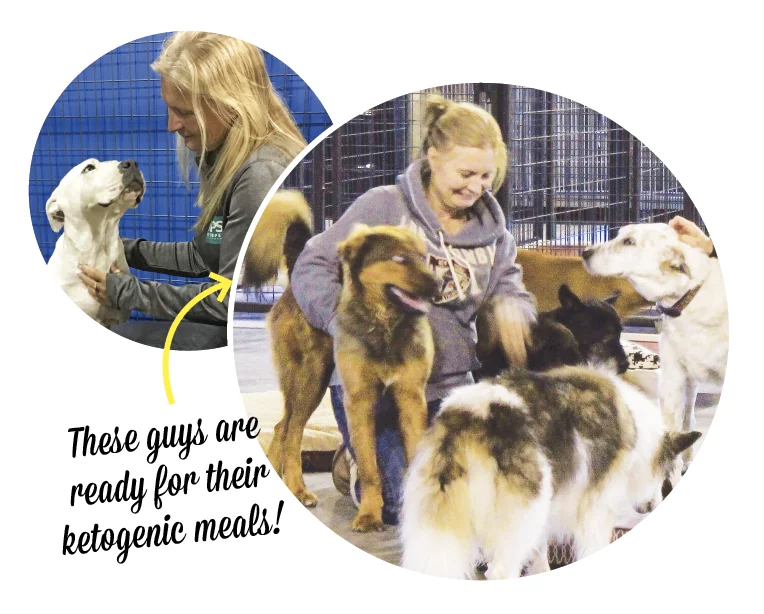
The foundation of KetoPet's cancer-fighting approach is the ketogenic diet, designed to slow or halt tumor growth. It looks like this: 80 to 90% fat (coconut, olive or MCT oil), 5 to 15% protein (beef) and 5% carbohydrates (vegetables). Extreme, but with reason. It rests on the Warburg theory (1924): cancer feeds on sugar (what carbs break into) but doesn't process fats well. The takeaway: cut out sugars/carbs and you slow or stop the cancer.
The takeaway: cut out the sugars/carbs and you'll slow or stop the cancer.
All dogs get weekly blood work to monitor the diet's metabolic impact. CT and PET scans every 60 days evaluate their cancers, with results exciting even initially skeptical researchers.
On a Quest
Behind this initiative are the founders of Quest Nutrition, makers of Quest Protein Bars. In 2014, Quest was the second fastest growing US company. With ~$500 million in annual sales, they're funding research on reversing metabolic disease. Despite ~$30 billion devoted to cancer research since 2011 with little headway, they dove in undeterred.
The Quest team isn't easily dissuaded. Co-founder Shannan Penna created the first 15 Quest Bar flavours in her kitchen six years ago. Nearly everyone advised against the glutted energy bar market, but Shannan and husband Ron saw an opening and proved the naysayers wrong.
The Powerful Effects of Diet
Rather than rest on Quest's success, they created the Epigenix Foundation to fund diet research, asking—and answering—profound questions about diet's effect on our lives. They're dog lovers to the core; many L.A. team members meet Sundays in Santa Monica with their dogs for Bulletproof coffee (with butter or high-fat cream, a keto specialty) and to recap the week. Shannan long wanted an animal sanctuary; combining the two birthed KetoPet Sanctuary.
One of the coolest things about their efforts is that they're not dependent on grant money, and there's no lucrative drug patent at the end. They simply have the will and finances to devote to this problem.
"It's a diet that is halting and reversing cancer," says Ron, "because only nutrition works on the many levels required to create an environment where cancer can't take hold. We don't use nutrition as our main tool because of some ideological leaning, but because the nutritional protocol we use is more powerful than any drug currently available. And since there's no drug at the end, no one had put money into researching this—until now."
Not ones to do things small, they built a beautiful facility. The 50-plus acre complex boasts a water park for the dogs and is outfitted with beds, sofas, blankets, toys, and lots of love from staff. The mind-blowing feature is the human-grade diagnostics at their disposal.
Outfitted with state-of-the-art PET/CT scanners (nuclear medicine imaging using radioactive sugar to visualize metabolism), they're answering interesting cancer questions by assessing the ketogenic diet's effects.
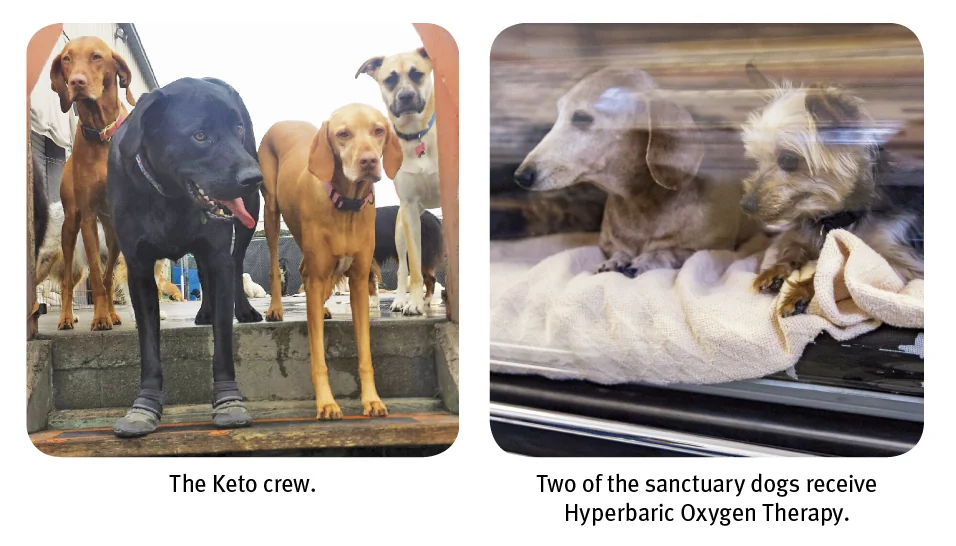
They also have two hyperbaric oxygen chambers as complementary therapy, and all dogs do metabolic conditioning (MetCon): strenuous activity at a high work rate to burn calories during and after, boosting heart health, mitochondrial function, and nutrient partitioning.
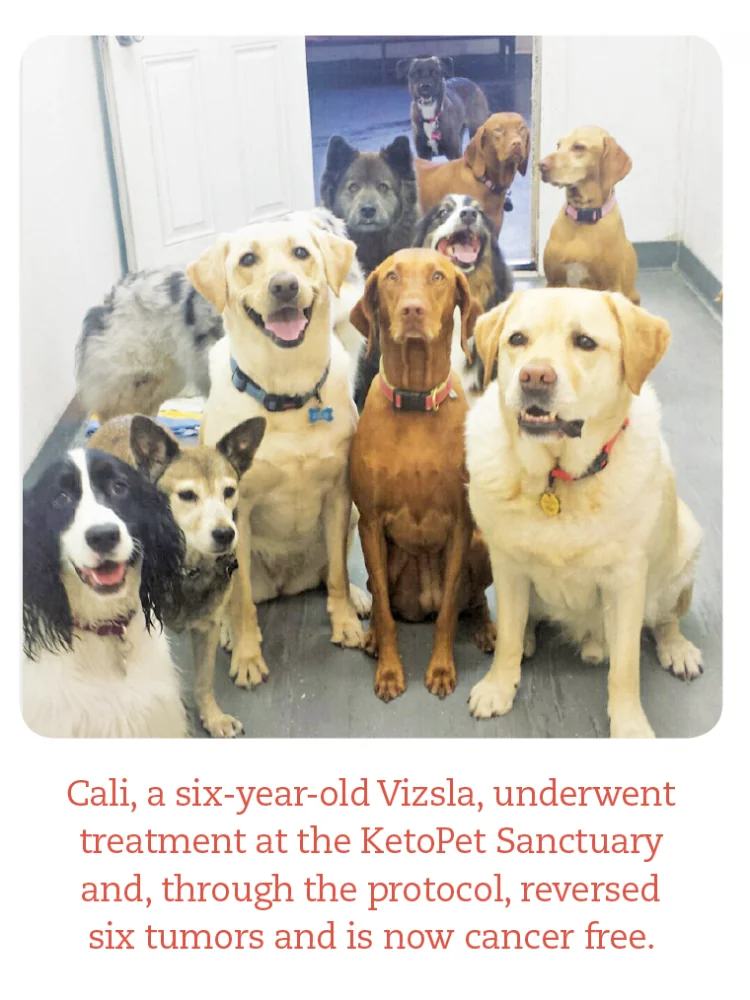
Cali, a six-year-old Vizsla, underwent treatment at KetoPet for hemangiosarcoma, reversing six tumors and is now cancer free.
One of their most impressive success stories is Cali, a six-year-old Vizsla who, through the protocol, reversed six tumors and is now cancer free. After treatment, Cali was adopted by Shannan and Ron and entered in the American Humane Association Hero Dog Awards (Emerging Hero Dog) for her role in nutritional cancer research, with promising applications for people and dogs.
Creating a Keto Diet For Pets
A Los Angeles counterpart to the Georgetown Sanctuary is in the works, eventually a purchasable keto diet for pets. The KetoPet team acknowledges it's hard for owners to manage alone and aims to make it accessible. Meanwhile, if you know a dog who needs help, email [email protected]. To donate or get involved, visit ketopetsanctuary.com. They also offer a free keto diet calculator for your dog.
What Is A Ketogenic Diet?
A ketogenic diet is typically defined as high-fat, moderate protein, and low-carb, but it goes beyond that—any nutritional approach that encourages the body to produce ketones.
What are ketones? Ketones are simply short-chain fats produced in your liver to be used for energy.
Eating ketogenically and using ketones for fuel has shown a host of health benefits, including increased cognitive function, improved insulin sensitivity, and enhanced performance.
Preparation & feeding steps
four measures from the nutrition desk
Rinse and refill the water bowl morning and evening, without fail.
Log your dog's weight weekly and adjust the ration in small steps.
Transition to a new food over seven days: a quarter, then half, then full.
Talk to your vet before adding any supplement to the bowl.