Why Dogs Eat Anything but Cats Are Picky: The Foodie Divide
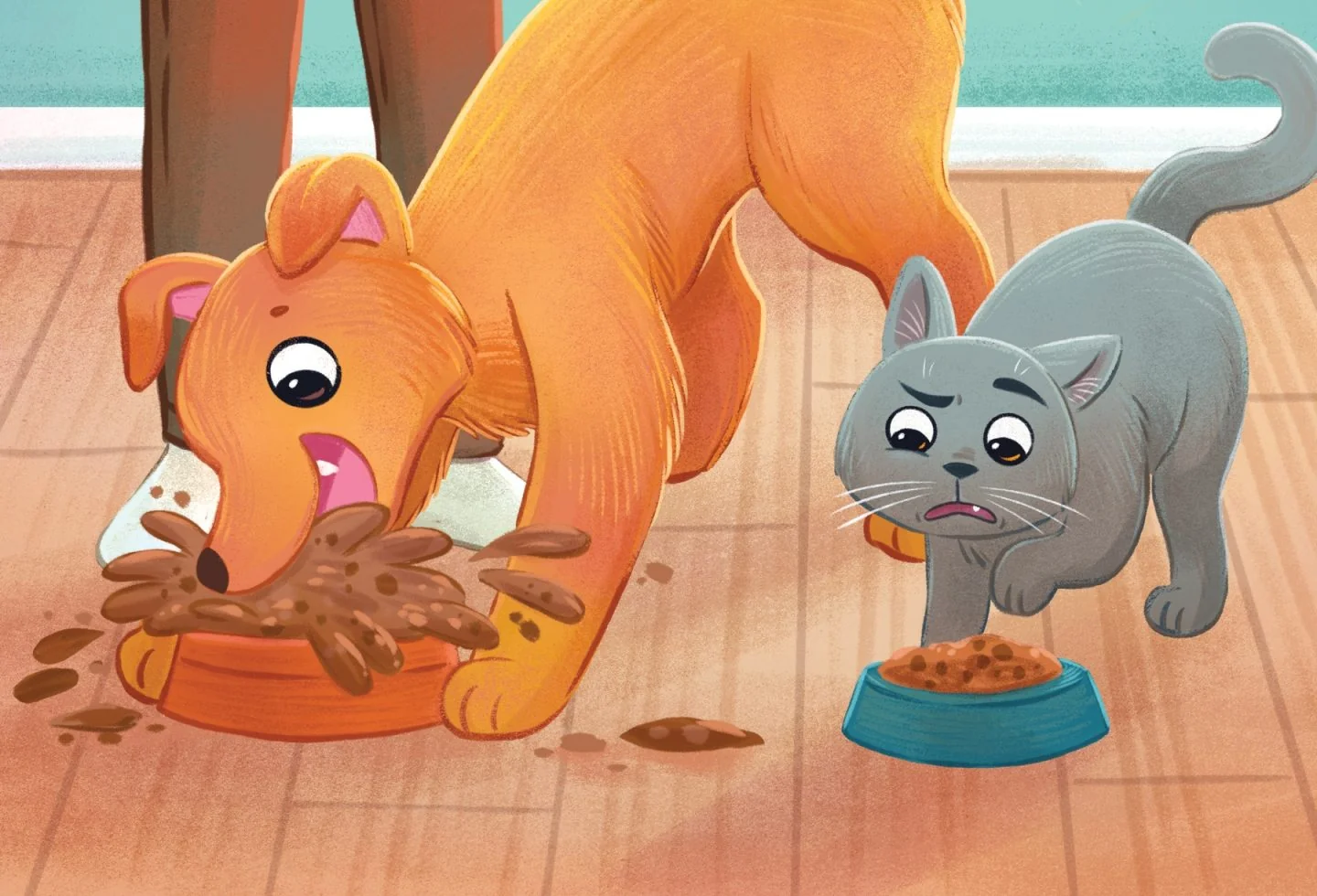
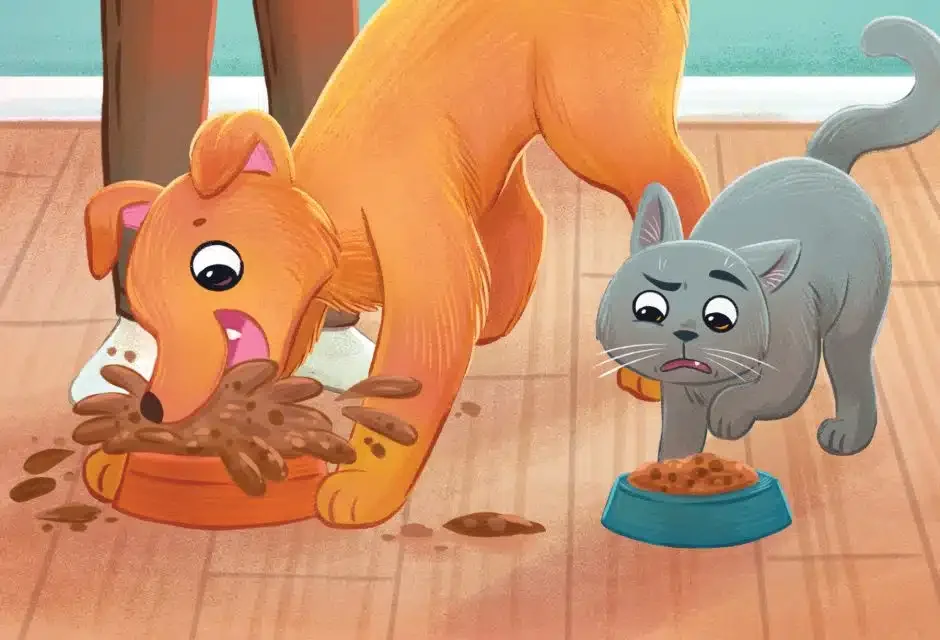
Dogs will gobble almost anything while cats turn up their noses—experts explain why.
By: Sheri Radford
Last Updated:October 30, 2024
Any owner who's watched their cat snub the priciest store food—while their dog happily eats rocks, shoes, dirty socks, and litter-box finds—has wondered about these opposite tastes. What drives the difference in our furry friends?
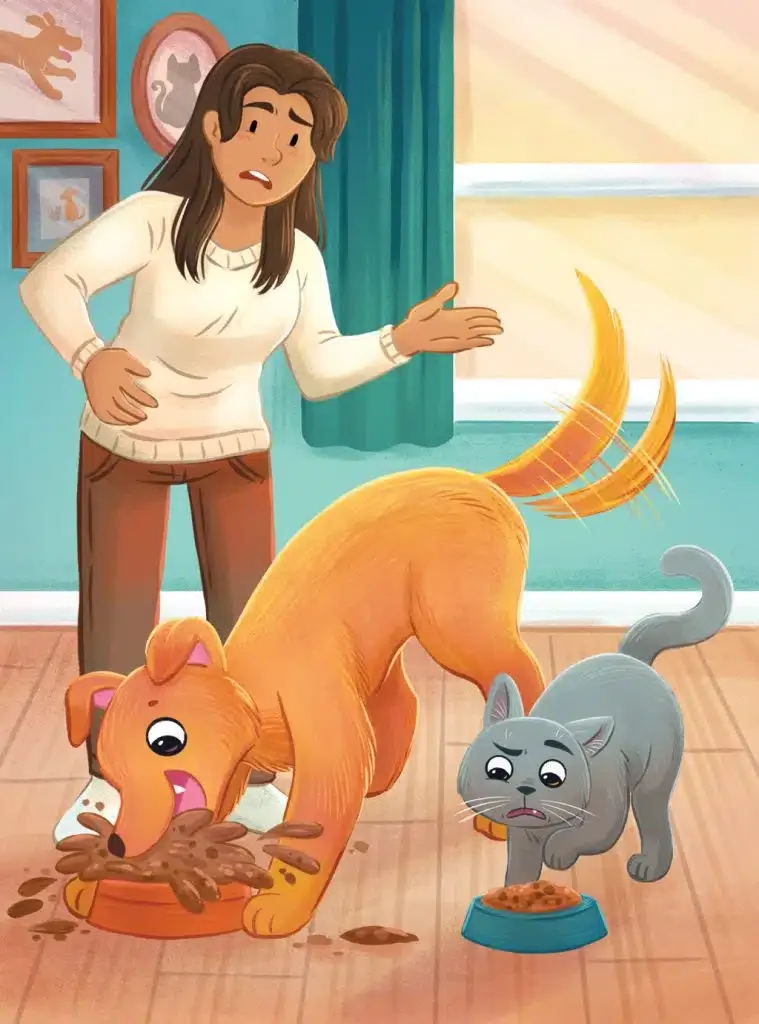
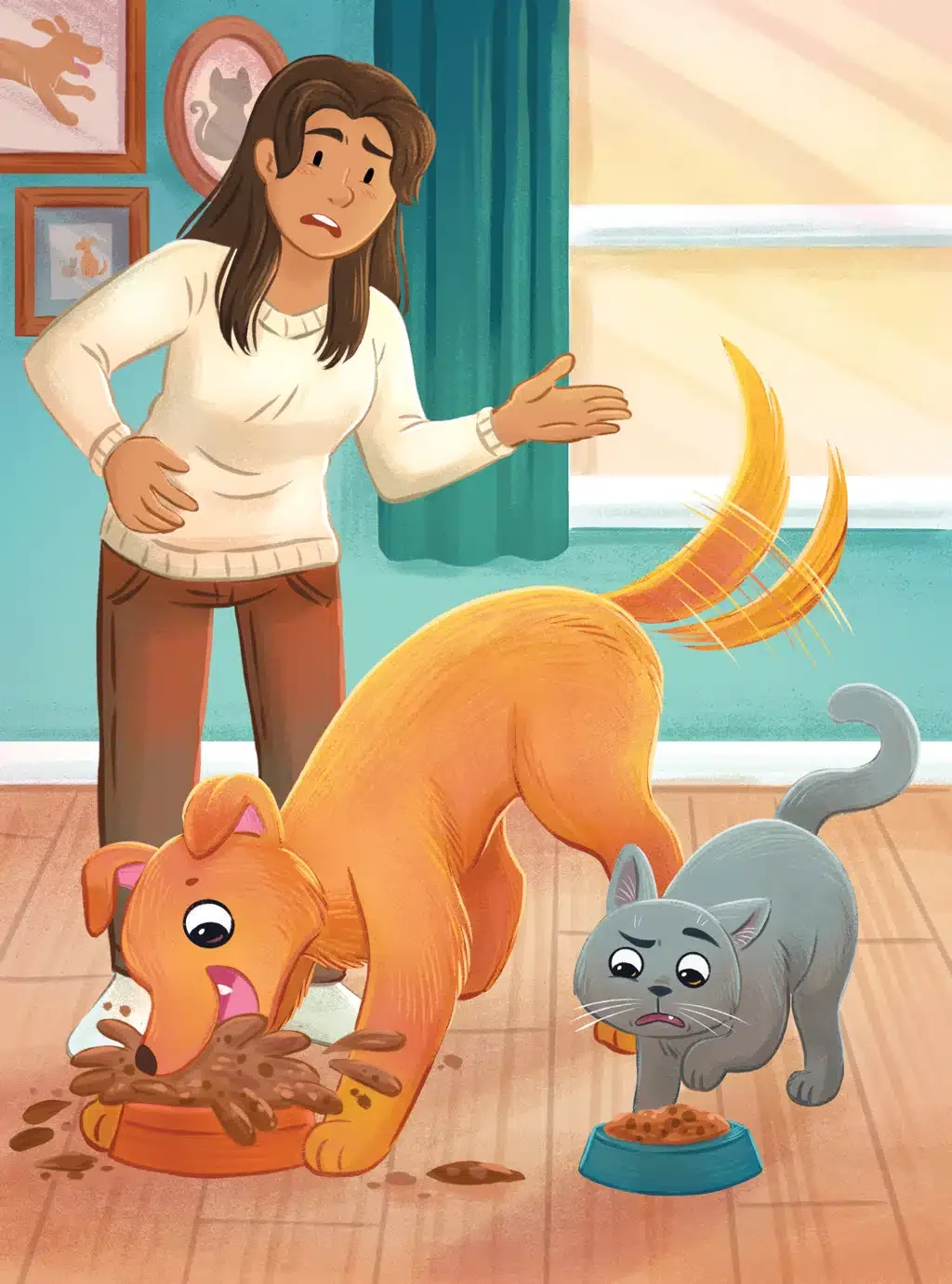
Illustration by Michelle Simpson
Omnivores and Carnivores
Domestic dogs are omnivores. Like us, they stay healthy eating meat, plants, (some) fungi and algae. "Cats evolved as more fastidious, specialized hunters, while dogs evolved as opportunistic scavengers, giving each different food survival strategies," says UK vet Emma Fulton. "Dogs are less picky and more willing to eat whatever's around. Their survival instinct drives them to grab any possible meal, even if rotten or unappealing to us." This drive, she notes, can "override judgement and lead them to eat things causing upset or even toxicity."
For cats, freshly killed small prey like rodents and birds are the ultimate lure. "This reliance on fresh meat likely made them warier of spoiled foods," Fulton says.
"This all goes a long way toward explaining why a washed-up carcass on a beach repels a cat but delights a dog."
"A key difference from cats is that dogs evolved tougher digestive systems for spoiled or rotten food. Their stomachs are quite acidic, near pH 1, which kills pathogens. Their short guts also move food through faster. So while risky, dogs handle things that would sicken cats and humans." This all goes a long way toward explaining why a washed-up carcass on a beach repels a cat but delights a dog.
Unlike omnivorous dogs, all cats—from housecat to tiger—are obligate carnivores: they need meat to survive and can't properly digest plants. Meat is over 70 percent of a cat's diet, putting them among hypercarnivores. (Others in this club: owls, snakes, spiders, most sharks.)
UK vet Daisy May notes cats, as obligate carnivores, have very particular needs. "They're tuned to seek high-protein, meat-based meals. Their fussiness often comes from this biology. A cat may reject food simply because it doesn't meet their nutritional needs," she says. "So their pickiness is a survival instinct ensuring they get what they need."
Taste Sensations

Annette-Shaff/Shutterstock
Bitterness, sweetness, and umami also shape cat and dog preferences. "Cats have a stronger sense of taste than dogs thanks to more bitter receptors. Foods bland or pleasant to dogs and us can taste bitter and unappealing to cats," Fulton says. A 2015 BMC Neuroscience study compared cat and human bitter receptors and found cats far more sensitive to bitterness. Rotten or toxic foods especially repel cats given their sharp taste. Dogs, though, "are drawn to strong tastes like sweetness and umami, which signal calories and protein. Even bitter foods may appeal if hungry enough."
Texas vet Michael Thompson, an animal nutrition expert, says "Cats lack the sweet receptors many animals, including dogs, have." Scientists studied DNA of domestic cats plus tigers and cheetahs, examining the Tas1r2 and Tas1r3 genes behind sweetness. The 2005 PLOS/Genetics results show Tas1r3 works but Tas1r2 doesn't, so cats can't taste sweet. Thompson says, "This may make cats naturally picky since their flavor range is limited."
Cats dislike bitter and can't taste sweet, but can't get enough umami. Also called savouriness, umami is the rich meaty note in cheese, mushrooms, wine, broth, and cooked meats. A 2023 Chem Senses study on domestic cats found umami is by far their strongest taste preference.
Joshua Errett, founder of Noochies! Cultivated Pet Food in California, knows how fussy cats are, saying, "They earn that picky reputation." He also knows their pull toward umami. At home trying a nutritional yeast dog treat, his cats grew obsessed with the yeast. "They kept coming into my room," he says. "I had it in a box and they tried to get in." After he put some in a bowl, they eagerly licked it up.
Dogs rely mainly on smell, but not cats: "It's not all smell. Their tongues do a lot." Cats have "almost a little lab in their noses, mouths and tongues," Errett says. "They sense what benefit the food has." They're also good at finding "that specific amino acid profile they like." The umami of Noochies yeast wins over cats and dogs, so the company makes freeze-dried yeast treats for both.
Routines and Adventures
Dogs seem more adventurous, while cats hate change. This reaches food. Cats, Fulton says, "take comfort in familiarity and routine. A sudden diet change can cause finicky eating or refusal."
Thompson agrees: "Cats are creatures of habit and may reject surprises if used to a certain food. Dogs, though, can be trained to eat varied foods thanks to their scavenger past." Cats rely on consistency to feel safe. "They build daily habits around feeding, grooming, play. Any disruption causes stress and anxiety."
Plus, Thompson says, "Cats have keen senses, especially smell and hearing. They're sensitive to new scents, sounds, environments. Unexpected changes bring unfamiliar cues that put them on edge." As risk-averse creatures, cats may read change as threat. "Their instinct is caution and avoidance to protect themselves."
Introducing New Foods
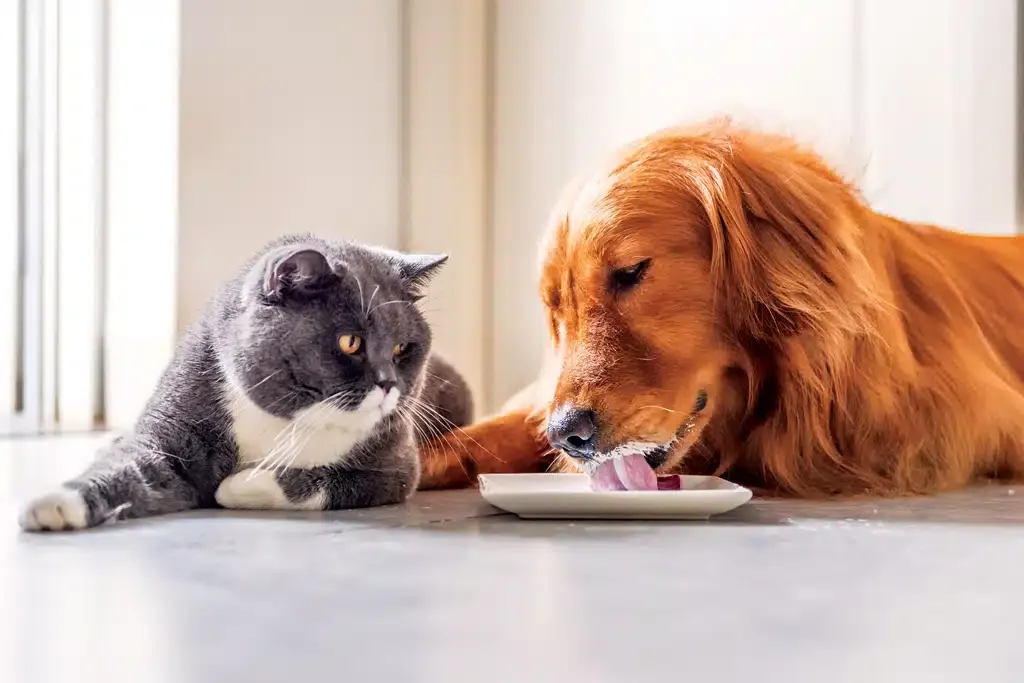
Chendongshan/Shutterstock
Any pet may need coaxing to try something new. "Dogs are generally easygoing at meals and we often see them happily eat whatever's in the bowl," says Mark Sapir, CMO of Open Farm. The Toronto company makes ethical, sustainable pet food. "Cats tend to be particular. They stick to what they know and are less adventurous. With wet food, they have specific texture and protein likes, making new foods tricky. Once you find a favorite, they're hooked."
Sapir shares tips for new foods. "For dogs, make the meal special. If your pup is bored with regular food, top it with something extra—freeze-dried treats, wet food, or a savory broth. That piques interest and wags tails," he says. "Cats are trickier. Patience is key. Go slow and introduce gradually. Find the texture and protein they love and stick with it." He lists top flavors: chicken and beef for dogs, poultry and fish for cats. "Dogs are more open to variety and rotating flavors."
Daisy May points out some cats are adventurous, while some dogs hesitate. "We know cats crave meat, but some will try other foods, especially if exposed young. And cats can pick up habits from each other! If they see another feline or a human munching, curiosity wins," she says. "With dogs, a bad food experience can turn them off if it caused upset. Some pups are cautious and need time with new treats and textures."
As always, the key to any dog or cat is remembering each is an individual. May says, "The main thing is each animal has their own personality and history shaping preferences."
This article originally appeared in the award-winningModern Dogmagazine.Subscribe today!
Preparation & feeding steps
four measures from the nutrition desk
Introduce one new ingredient at a time, at least three days apart.
Split the daily ration into two or three calm, seated sittings.
Keep all treats under ten percent of the day's total calories.
Rinse and refill the water bowl morning and evening, without fail.